Biometric identity management explained: what it is, how it fits within biometric access control, and why centralized enrollment matters.
What you’ll learn: You’ll deep dive into biometric identity management. Learn what it is and how it verifies a person’s identity and keeps it up to date at access points across the enterprise.
Who should read this? Security directors, IT/security engineers, and facilities managers who are new to the concept of biometric identity management and want to understand how it fits within biometric access control.
Researching solutions in the biometric space can sometimes make you feel like you’re floating in word soup. Common terms like biometric readers, access control, and biometric authentication software start to blur together. But it’s important to understand what each solution actually does and where it fits within your organization’s access control tech stack.
This article puts a name to a concept many are trying to understand: biometric identity management. Keep reading to learn what it is, how it relates to biometric access control, which biometric modalities it commonly uses, and how it manages identities across multiple sites without re-enrolling the same people over and over.
What is Biometric Identity Management?
Biometric identity management is the layer of technology that verifies who a person is based on their unique biological traits. It also makes sure biometric identities remain accurate across readers, the physical sites where they’re installed, and the connected physical access control system (PACS).
Now that you know what it is, here are some things it isn’t:
- A biometric reader
- A single fingerprint or facial template
- A replacement for your PACS
How Does Biometric Identity Management Relate to Biometric Access Control?
Biometric identity management is a critical capability within biometric access control. It provides the secure identity verification required for the larger system to grant access to physical spaces.
Once it authenticates a unique biological trait presented to a reader, the result is passed to the organization’s existing PACS, which applies access permissions to determine whether the door should open.
Which Modalities Are Common in Biometric Identity Management?
Two modalities frequently used in biometric identity management are fingerprint and facial authentication. When a person presents their fingerprint or face to a reader, their biometric characteristics are compared to the enrolled template stored in the system.
- Facial authentication offers a contactless experience and supports fast throughput at high-traffic access points.
- Fingerprint authentication provides a familiar, deliberate way for users to confirm their identity.
- Both fingerprint and facial authentication are mature technologies proven to verify identity quickly without automatically requiring users to remember or carry another credential.
- It’s also possible to layer authentication modalities together for even higher security applications. For example, you could require a user to present their face or fingerprint along with a key card. This doesn’t necessarily demand installation of separate readers for each modality. It depends on which vendor you choose. For example, all BioConnect readers offer multimodal authentication in a single device.
How BioConnect Readers Support Multi-Modal Authentication
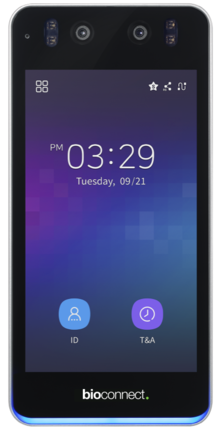
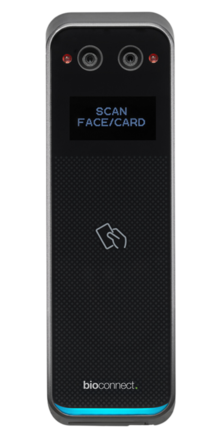
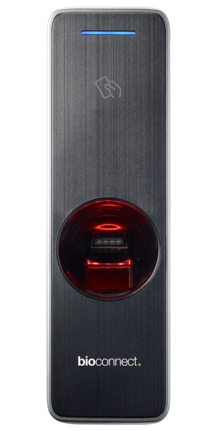
| Arc Vision | Arc Rex | Arc Touch |
| Face + Card + Pin | Face + Card | Finerprint + Card |
How Does Biometric Identity Management Work Without Re-enrollment at Every Site?
Without a dedicated biometric management layer, organizations may find themselves managing biometric data in multiple places, limiting future flexibility, and increasing admin complexity.
A centralized identity management layer can enroll a user once, create a template and connect it to their identity record, and securely synchronize it with all relevant readers and sites across the enterprise. Since teams aren’t managing biometric data separately by reader or location, users don’t need to enroll more than once.
BioConnect Enterprise is an example of biometric authentication software that lets users enroll once and gain access everywhere they’re authorized to be. It also offers a No Enrollment feature for facial authentication. This feature syncs existing profile images from an existing access control or HR system, eliminating the need for each user to physically enroll in the system.
How Widely Adopted is Biometric Identity Management?
Biometric identity management isn’t typically measured as a standalone technology category, making it challenging to uncover a single adoption rate. However, available evidence does point to growing use of and investment in biometric access control. Because identity management is an integral component within these systems, the statistics below offer a useful indication of how quickly the market is developing.
- Emergen Research estimates that the global biometric access control market will grow from $8.24 billion in 2025 to $28.64 billion by 2035.
- Goode Intelligence describes biometrics as an increasingly important part of the physical access control system (PACS) toolbox and forecasts a $16.3 billion global revenue opportunity by 2031.
Turn Understanding Into Informed Decision Making
You likely didn’t land on this article by searching the term "biometric identity management." But now that you’ve read it, you should understand what it is and how it works within a biometric access control system.
Here’s your chance to keep the clarity flowing. Use the free Solution Builder to explore which biometric security platform would best suit your organization’s needs. Already evaluating different solutions? Use the Enterprise Buyer’s Checklist to compare options
FAQs
Q: Is biometric identity management the same as biometric access control?
A: No. Biometric identity management is the crucial identity layer within biometric access control. It manages biometric identities and provides the consistent identity verification biometric access control needs to grant authorized users access to physical spaces.
Q: Do users need to re-enroll at every site for biometric identity management to work?
A: Re-enrollment isn’t necessary with a centralized system. Once a user enrolls, their biometric template is distributed to the appropriate readers. They can then authenticate everywhere they’re authorized to be without enrolling again.